
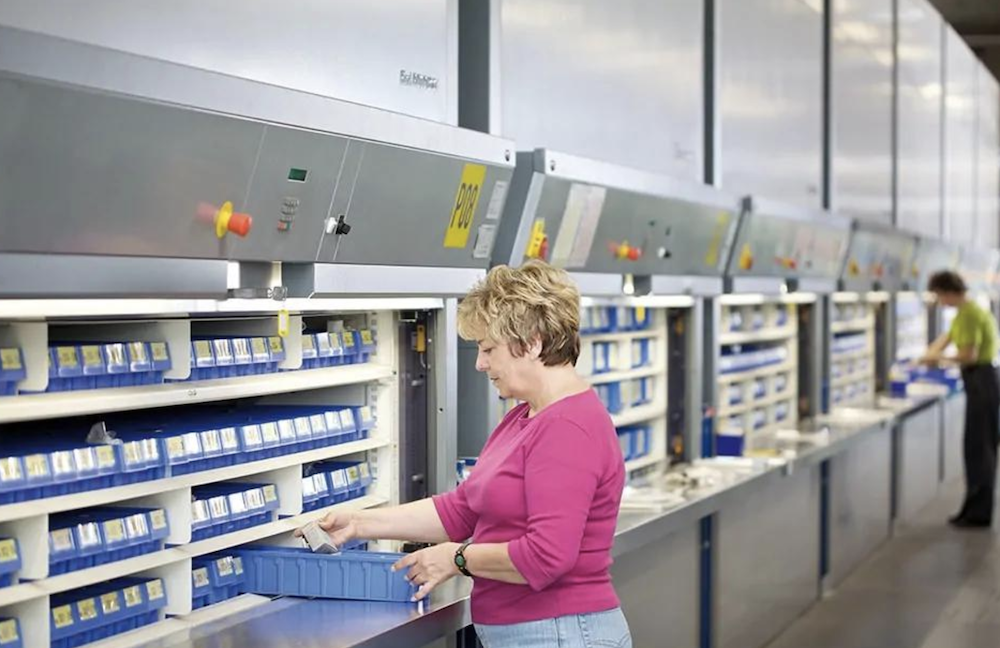
Choosing the right storage equipment can significantly affect how efficiently a warehouse operates. As inventory grows and orders increase, businesses need storage solutions that make products easy to access without wasting space.
At Option 3 Material Handling, we help businesses find warehouse storage solutions. These solutions fit their facility, inventory needs, and daily operations. Two options worth considering are vertical carousel and horizontal carousel systems.
Both types of warehouse carousels bring stored inventory directly to employees, reducing the need to travel between storage locations. However, they operate differently and serve different storage needs. Understanding these differences can help you choose the right carousel storage system for your warehouse.
What Is a Vertical Carousel Storage System?
A vertical carousel storage system is an automated storage unit that moves shelves or carriers along a vertical path. When an employee requests an item, the system rotates the carriers. This brings the right storage location to an access opening.
Unlike traditional shelving, employees do not have to walk down aisles or reach high shelves. Vertical carousels bring the inventory to a fixed picking station.
One of the biggest advantages of vertical carousel storage is its ability to use available building height. Facilities with limited floor space can increase storage capacity by using unused vertical space. These systems can help businesses store smaller inventory items, including tools, replacement parts, and manufacturing components.
A vertical shelving carousel can also help organize inventory within a defined storage area. Depending on the equipment selected, carriers may be configured to accommodate different product sizes and storage requirements.
For warehouses looking to increase storage density without expanding their building, vertical systems may offer a practical solution.
What Is a Horizontal Carousel Storage System?
A horizontal carousel storage system uses a series of bins or shelves that move along a horizontal track. Instead of moving up and down, the storage locations move around a horizontal loop. They keep moving until the requested inventory reaches the operator. These systems are commonly used for automated picking, parts delivery, and sortation applications.
At Option 3, our horizontal carousel storage options support efficient inventory retrieval by automatically positioning heavy-duty bins for employees. Horizontal systems work well for facilities that process many orders. They also help when staff need regular access to many stored products.
A horizontal carousel picking system can reduce walking during order fulfillment. Employees remain at a picking station while the equipment delivers the necessary storage locations. For distribution centers handling many items, this approach can improve picking efficiency and help keep work organized.
Vertical vs. Horizontal Carousels: What Are the Main Differences?
Although both systems use automated storage and retrieval technology, their designs affect how they fit into a warehouse.
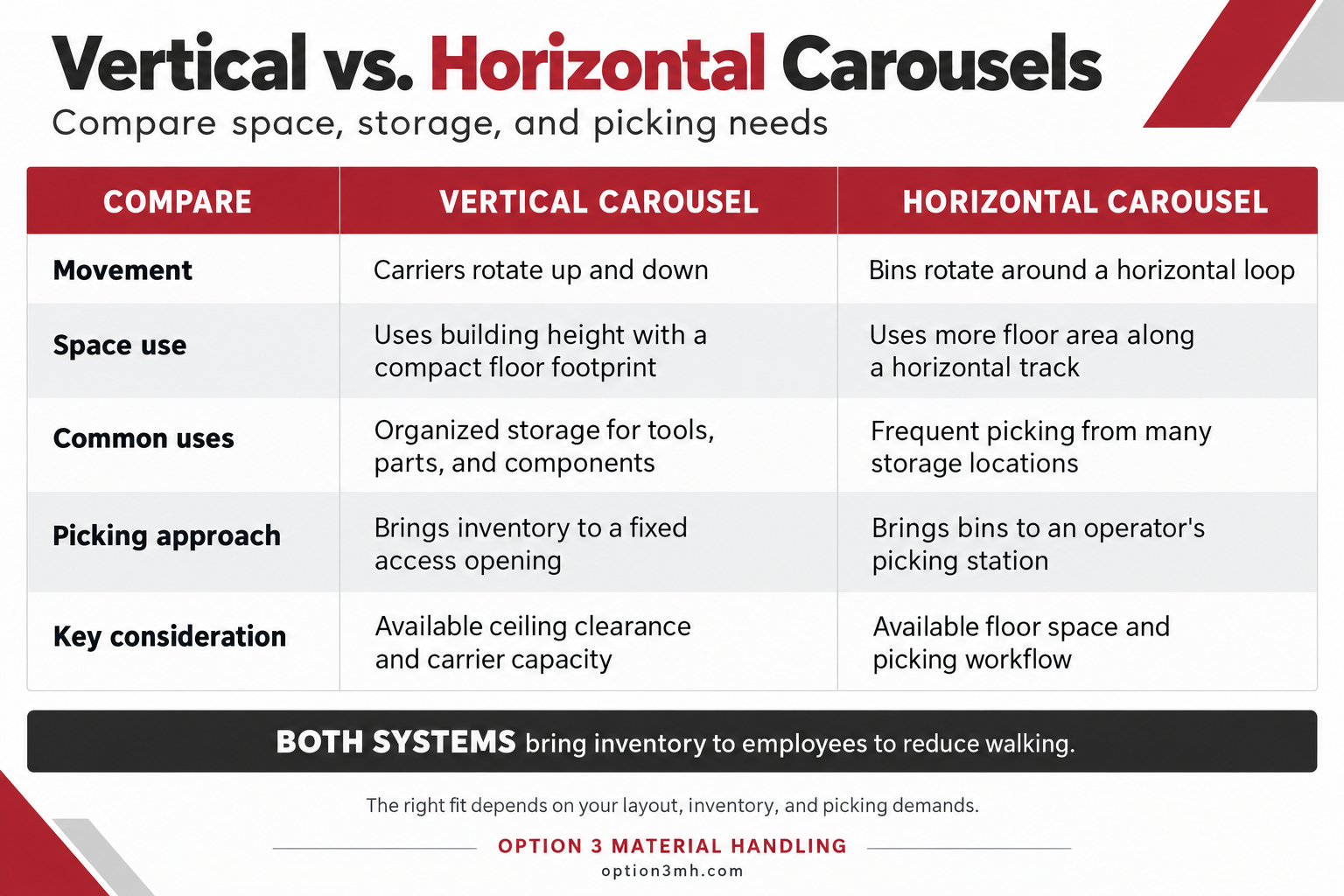
Space Requirements
The most noticeable difference is how each system uses space. A vertical unit uses ceiling height, making it worth considering when floor space is limited. Its relatively compact footprint can help businesses make better use of their existing facility.
Horizontal equipment requires more floor space because its bins move along a horizontal track. This arrangement may work well in facilities with enough floor space to accommodate the equipment and its picking stations. When evaluating warehouse space optimization, businesses should consider available ceiling clearance, floor dimensions, and surrounding equipment.
Inventory and Storage Needs
The products being stored also influence equipment selection.
Vertical carousel shelves can accommodate organized storage of smaller parts and components. The appropriate carrier configuration depends on inventory dimensions, weight, and the equipment's rated capacity.
Operations that require frequent picking from multiple storage locations often use horizontal systems. For businesses considering parts carousel storage, the right system depends on how many items they need to store. It also depends on how often employees need to retrieve them.
Neither design is automatically better for every inventory type. The equipment must match the products and the way employees handle them.
Picking and Order Fulfillment
Picking activity is another important consideration.
Both systems use a goods-to-person approach. They bring inventory to employees. Employees do not travel to every storage location.
However, a horizontal carousel system is particularly well suited to high-speed picking applications. Vertical systems can also improve picking efficiency while offering the additional advantage of using available building height.
The best choice depends on order volume, picking patterns, and the amount of inventory handled during each shift.
How to Choose the Right Carousel Storage System
Before investing in industrial carousel storage, evaluate how the equipment will function within your existing warehouse.
Evaluate Your Available Space
Start by examining your facility's layout.
A warehouse with high ceilings and limited floor space may benefit from vertical storage solutions. A facility with more available floor area may have greater flexibility when considering horizontal equipment.
Remember to account for structural clearances, access requirements, and the space employees need to work safely around the system.
Consider Your Inventory
Different products require different storage configurations.
Review the size and weight of your inventory, along with the number of unique items your facility handles. A business storing replacement components may have different requirements than a distribution center processing customer orders.
For industrial parts storage, equipment capacity and bin configuration matter. Inventory should fit securely within the selected system while remaining accessible to employees.
Review Your Picking Demands
Consider how often employees retrieve products and how much time they spend traveling between storage locations.
A facility with frequent picking may benefit from a carousel picking system. It delivers inventory directly to a workstation.
Businesses should also consider whether their current picking process creates delays during busy periods. Understanding these patterns helps determine which equipment can best support daily operations.
Plan for Future Growth
Storage requirements often change as businesses expand.
When comparing automated warehouse storage systems, consider whether the selected equipment will continue to meet your needs as inventory levels and order volumes change.
Choosing a system that supports your long-term goals helps you avoid extra equipment changes as your operation grows.
Can Warehouse Carousel Systems Be Customized?
Every warehouse has different storage requirements, so equipment selection should begin with a careful review of the facility.
Depending on the manufacturer and model, carousel storage solutions may offer different carrier dimensions, bin arrangements, and load capacities.
For example, businesses evaluating vertical carousel shelving should consider whether the available carrier configurations can accommodate their inventory. Horizontal equipment may also be selected with different storage arrangements to support specific picking and parts handling requirements.
Customization involves more than choosing the equipment itself. The system must also fit within the surrounding warehouse layout and support existing workflows.
At Option 3 Material Handling, our team works with trusted manufacturers. We help identify equipment that meets each customer's operational needs. We provide both new and used carousel options, allowing businesses to evaluate solutions that fit their space and budget.
How Do Carousels Fit Into a Larger Warehouse System?
A carousel is one part of a facility's overall material handling system.
In some operations, carousel equipment can work alongside conveyors and other storage equipment to support efficient product movement.
For example, a facility may use warehouse conveyor systems to transport picked products to another processing area after employees retrieve them from a carousel. The appropriate arrangement depends on the warehouse layout and the processes already in place.
Businesses considering warehouse automation solutions should evaluate how new equipment will interact with their existing operations rather than selecting each system independently. A coordinated approach helps ensure that storage equipment supports the facility's broader productivity goals.
Find the Right Warehouse Carousel With Option 3 Material Handling
Selecting the right storage system requires more than comparing equipment specifications. Your warehouse layout, inventory requirements, and picking operations all influence which solution makes the most sense.
At Option 3 Material Handling, we provide custom material handling solutions. They are designed to improve warehouse efficiency and support long-term needs.
Our team works with trusted equipment manufacturers to help customers find vertical and horizontal carousel options that fit their facilities and budgets. We also provide engineering, installation, inspection, and maintenance services to support your equipment.
Whether you are considering a new warehouse carousel system or exploring ways to improve your existing storage setup, we can help you evaluate your options. Contact Option 3 today to discuss your warehouse storage needs and find a solution that works for your operation.

